
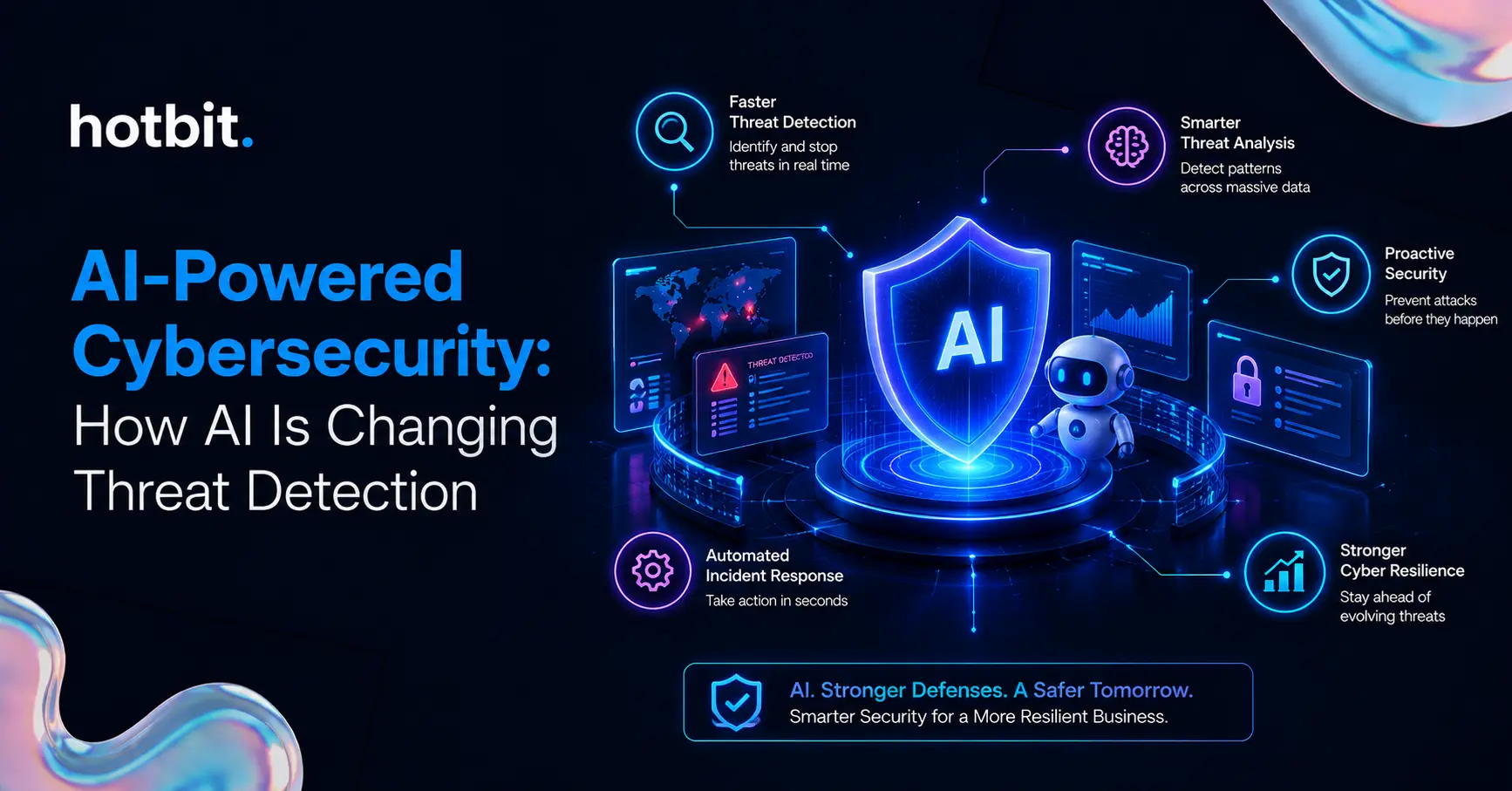
AI-powered cybersecurity is closing the gap between attack speed and defense speed faster than most security teams expected. Gartner projects that more than 75% of enterprises will rely on AI-amplified cybersecurity platforms for most of their security use cases by 2028, up from less than 25% in 2025. As organizations adopt these technologies, access to specialized cybersecurity teams can also help businesses strengthen their technical capabilities and respond to evolving security needs
What Is AI-Powered Cybersecurity?
AI-powered cybersecurity pairs machine learning with the signature-based defenses security teams already run. Instead of relying only on a fixed list of known threats, these systems also build a live picture of what normal looks like across your network, identities, and endpoints, then flag whatever breaks that pattern. As AI agents increasingly interact with enterprise systems, identity and access management for AI agents also plays an important role in controlling permissions and monitoring agent activity.
According to IBM’s 2023 Cost of a Data Breach Report, organizations using AI and automation extensively cut their breach lifecycle by 108 days on average, to 214 days instead of 322. That’s the difference between catching an incident early and living through a crisis. A secure, well-designed business website with the right features can also support stronger digital security and automation.
Where AI is strengthening threat detection
1. Behavioral Anomaly Detection
2. Automated Alert Triage
3. Predictive Risk Scoring
4. Automated Incident Response
5. Continuous Identity Monitoring
6. Cloud Workload Protection
As infrastructure spreads across public cloud, private cloud, and on-premises systems, AI models watch workload behavior across all three, typically helping flag misconfigurations and unusual resource activity earlier than a periodic manual audit would. For businesses scaling fast, this is the layer that keeps growth from outrunning visibility.
Are You Ready for AI-Driven Threats?
According to the World Economic Forum’s “AI and Cyber: Empowering Defenders” report, developed in collaboration with KPMG and published in May 2026, 94% of cyber leaders identify AI as the defining force in cybersecurity, and 77% of organizations already use it in their cyber operations. AI is reshaping the field on both sides accelerating threats and defenses alike, and pushing organizations into a faster race against attackers than most were built for.For practical steps to strengthen security, organizations can also follow a cybersecurity checklist for SMEs.
Readiness comes down to three questions. Is your data clean and connected enough for a model to learn from it? Is your team set up to act on what the model finds, not just watch a dashboard? And is your incident-response process fast enough to match the detection speed you’re paying for?
How Hotbit Infosoft Helps You Get There
We connect the data pipelines these models depend on, tune them to your actual environment, and build the automation around them so detection speed turns into response speed not just a faster alert. That’s the work of becoming future-ready: not a single tool, but a system that keeps learning as the threats do.
Ready to move from reactive to future-ready security? Talk to an expert on Hotbit’s AI Automation team and find out what your first move should be.